
LinkedIn has introduced a new AI-powered feed ranking system designed to improve how content appears in users’ feeds. The update focuses on showing more relevant posts while reducing spam, repetitive content, and automated comments that often flood professional conversations.
For professionals, creators, and businesses who rely on LinkedIn to share insights and build networks, understanding how this AI feed ranking works is becoming increasingly important.
Why LinkedIn Changed Its Feed Ranking System
LinkedIn has grown into one of the largest professional platforms in the world, with millions of posts being shared every day. As the amount of content increased, the platform needed a smarter way to decide which posts users should see first.
The new AI-powered system analyzes posts and engagement patterns to highlight content that is more useful, authentic, and relevant to each individual user. Instead of simply displaying posts in chronological order, the platform now evaluates different signals to decide which posts should appear higher in the feed.
This shift aims to improve the overall user experience by making sure the feed contains valuable professional insights rather than low-quality engagement tactics.
How the AI Feed Ranking System Works
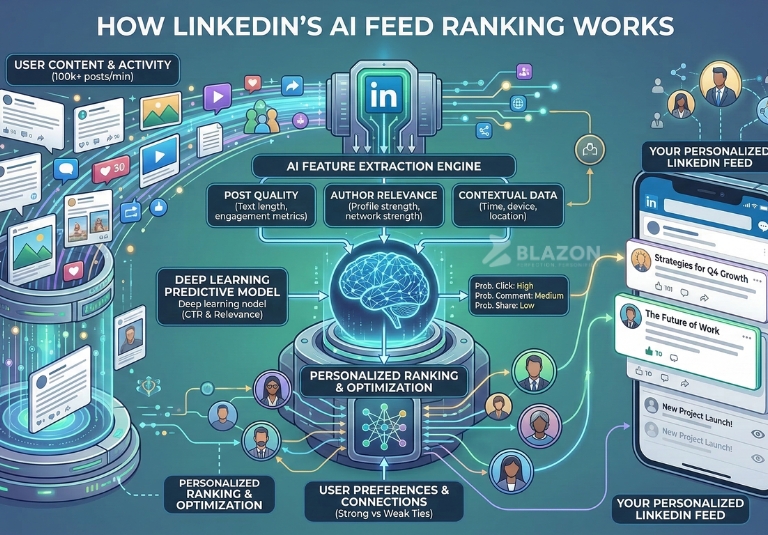
LinkedIn’s AI system evaluates several factors before deciding where a post should appear in someone’s feed. The algorithm tries to predict which posts a user is most likely to find useful or interesting.
Relevance to Professional Interests
The AI looks at a user’s professional background, industry, and previous activity. If someone frequently interacts with posts about marketing, technology, or entrepreneurship, the system will prioritize similar topics.
This helps ensure that the feed feels more personalized rather than filled with unrelated content.
Quality of Conversations
LinkedIn is placing greater importance on meaningful engagement. Posts that encourage thoughtful discussions or share useful knowledge are more likely to be promoted by the algorithm.
For example, a post that generates insightful comments and discussions will generally perform better than one that only receives quick reactions.
Authentic Content Signals
The platform’s AI also evaluates whether content appears genuine or artificially boosted. It looks for patterns that suggest authentic interaction rather than automated activity.
This is one of the main reasons LinkedIn has started taking action against automated comments and repetitive engagement.
Crackdown on Automated Comments
One of the biggest issues on LinkedIn in recent years has been the rise of automated engagement tools. These tools often generate generic comments such as “Great post!” or “Thanks for sharing,” which can appear across many posts.
LinkedIn has recognized that these types of comments reduce the value of conversations on the platform. To address this problem, the company is now actively working to detect and limit automated comments and engagement pods.
The AI system can identify repetitive patterns in comments and reduce their visibility in feeds. In some cases, these comments may not appear beyond the commenter’s immediate network.
By discouraging automation, LinkedIn hopes to encourage genuine discussions and professional knowledge sharing.
Reducing Engagement Bait
Another focus of the new AI ranking system is limiting what LinkedIn calls “engagement bait.” These are posts designed primarily to attract likes or comments rather than provide useful insights.
Examples include posts that ask users to comment with simple words or emojis just to increase engagement numbers.
LinkedIn’s AI is now trained to detect these tactics and reduce their reach. The goal is to ensure that posts offering real value are more visible than those trying to manipulate the algorithm.
What This Means for Creators and Professionals
The new AI feed ranking system changes how content performs on LinkedIn. Instead of focusing on engagement tricks, users will need to focus on quality and authenticity.
Creators who share genuine experiences, industry knowledge, or helpful advice are more likely to gain visibility. Posts that spark thoughtful conversations or provide learning opportunities will also perform better.
For professionals using LinkedIn to build personal brands, this update encourages a shift toward meaningful content rather than viral-style posts.
Tips to Adapt to LinkedIn’s AI Feed Ranking
Professionals who want to perform well on LinkedIn should consider adjusting their content strategies.
First, focus on sharing valuable insights related to your industry. Educational or experience-based posts tend to generate stronger engagement.
Second, encourage real discussions by asking thoughtful questions rather than prompting quick reactions.
Third, avoid using automation tools to generate comments or engagement. LinkedIn’s AI systems are designed to detect these behaviors.
Finally, consistency matters. Posting useful content regularly helps the algorithm understand your expertise and audience.
The Future of LinkedIn’s Feed
LinkedIn’s AI-powered ranking system reflects a broader trend across social media platforms. Artificial intelligence is increasingly being used to filter content and highlight information that users find most valuable.
By reducing spam, automated comments, and engagement manipulation, LinkedIn aims to create a feed that feels more professional and trustworthy.
For users, the message is clear: authenticity and expertise are becoming more important than ever in how content is discovered on the platform.