
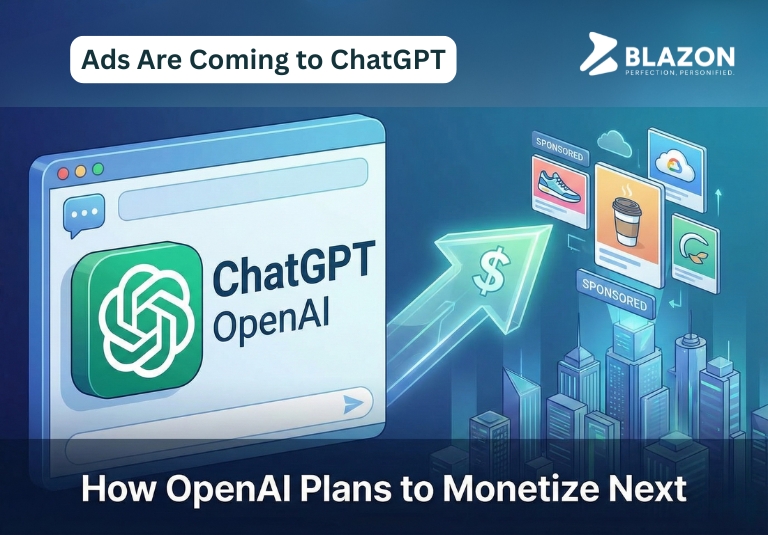
ChatGPT started as a clean, distraction-free product. No banners. No pop-ups. No sponsored links trying to grab attention mid-sentence. That calm experience is a big reason why people adopted it so quickly. Now, that phase may be changing.
Recent signals suggest that ads are likely coming to ChatGPT. This does not mean the product is suddenly turning into a billboard, but it does show that OpenAI is thinking seriously about long-term revenue and sustainability.
So what’s changing, and why now?
Why OpenAI needs new revenue paths
Running ChatGPT on a global scale is expensive. The infrastructure required to handle millions of conversations every day is massive. On top of that, constant updates, safety systems, and new features add ongoing costs.
Right now, most revenue comes from paid subscriptions and enterprise access. Plans like ChatGPT Plus and business tiers bring in steady income, but they may not be enough to support continued growth at the current pace.
Ads offer something subscriptions do not: scale. Even a small ad model, applied carefully, can generate significant income when the user base is large enough.
Ads do not mean the end of a clean experience
One common fear is that ads will ruin ChatGPT’s simple interface. That outcome is unlikely, at least in the early stages.
The more realistic approach is subtle placement. Instead of traditional display ads, OpenAI may test:
- Sponsored answers clearly marked as such
- Brand suggestions within specific commercial queries
- Optional sponsored tools or integrations
- Ads shown only to free users
This keeps paid users protected while allowing free access to remain viable.
The focus seems to be on relevance rather than interruption.
How ads could actually fit the product
ChatGPT is not a social feed. People come with intent. They ask questions. They want solutions. That changes how ads can work.
For example, if someone asks about project management tools, a sponsored suggestion for a relevant platform may feel helpful instead of annoying, as long as it is transparent.
The challenge is trust. Users must know when a response is sponsored and when it is neutral. If that line blurs, confidence in the product could drop fast.
OpenAI appears aware of this risk and has repeatedly emphasized transparency in its public messaging.
Why now is the right moment
Timing matters. ChatGPT now has a stable user base and strong brand recognition. Many users depend on it daily for work, learning, and planning. That level of reliance creates room for careful experimentation.
At the same time, competitors are building similar products. Monetization is not just about money. It is also about staying competitive and funding future development.
Waiting too long could limit growth. Moving too fast could damage trust. The current moment sits right in the middle.
What this means for users
For free users, ads may become part of the experience. That said, they are likely to be light, relevant, and clearly labeled.
For paid users, the experience may stay mostly unchanged. In fact, ads could make subscriptions more valuable by offering an ad-free space.
For businesses, ads could open new discovery channels. Being visible inside a question-based interface is different from search or social promotion. It reaches people at the moment they are thinking through a problem.
That kind of intent-driven exposure is powerful.
Concerns around bias and fairness
One major concern with ads inside conversational tools is bias. If brands can pay for placement, will answers still be balanced?
This is where strong rules matter. Sponsored content must not override safety rules, factual accuracy, or user well-being. Ads should supplement answers, not shape them.
If done poorly, trust erodes. If done carefully, ads stay in the background and users remain in control.
OpenAI’s long-term credibility depends on getting this balance right.
A shift from product to platform
Ads signal something bigger than revenue. They suggest that ChatGPT is moving from being just a product to becoming a platform.
Platforms connect users, tools, services, and information. Ads are one part of that ecosystem. Subscriptions are another. Developer access and integrations complete the picture.
This kind of structure allows growth without locking out users who cannot pay.
What to expect next
Ads are unlikely to arrive overnight or everywhere at once. Expect small tests, limited formats, and gradual rollout. Feedback will play a big role in shaping what stays and what gets dropped.
If users react negatively, OpenAI has room to adjust. If ads prove useful and respectful, they may become a normal part of the experience.
The key factor will be clarity. Users want to know what they are seeing and why.
Final thoughts
Ads coming to ChatGPT are not a surprise. They are a sign of maturity. Every widely used platform eventually faces the same question: how to fund growth without breaking trust.
If OpenAI keeps ads relevant, transparent, and optional, the core experience can remain strong. The next phase will test not just a business model, but the relationship between users and a tool many now rely on every day.
How this plays out will shape the future of conversational platforms as a whole.